Spectral Archive: Anthology of Franciscos Francos

Featured in:
• Exhibition at INDEX of Art & Technology, Portugal 2024
• Tua-Tiu-Tiann International Festival of Arts (TTTIFA), Taiwan 2022 (exhibited in augmented reality)
• Henrique & Francisco Franco Museum, Portugal 2022
• Diário de Notícias (online newspaper), Portugal 2022
• Diário de Notícias (printed newspaper) - Portugal March 4 2022
• Jornal da Madeira (online newspaper), 2022
• RTP Madeira - Casa das Artes, 2022
Production year: 2021/2022
Mediums: artefacts made with plaster powder, extruded polystyrene, fibre glass, resin, resin pigments, acrylic paints and varnishes, glues, fillings, mirror • Stands in stainless steel and steel paints • Digital illustrations printed on paper and framed.
For more detailed information, please scroll down to each artefact.
• Exhibition at INDEX of Art & Technology, Portugal 2024
• Tua-Tiu-Tiann International Festival of Arts (TTTIFA), Taiwan 2022 (exhibited in augmented reality)
• Henrique & Francisco Franco Museum, Portugal 2022
• Diário de Notícias (online newspaper), Portugal 2022
• Diário de Notícias (printed newspaper) - Portugal March 4 2022
• Jornal da Madeira (online newspaper), 2022
• RTP Madeira - Casa das Artes, 2022
Production year: 2021/2022
Mediums: artefacts made with plaster powder, extruded polystyrene, fibre glass, resin, resin pigments, acrylic paints and varnishes, glues, fillings, mirror • Stands in stainless steel and steel paints • Digital illustrations printed on paper and framed.
For more detailed information, please scroll down to each artefact.
Spectral Archive is an evergrowing archive of events that never happened: unfulfilled promises, forgotten histories, lies, dreams for a better world that never came to be... Anthology of Franciscos Francos is the first entry to the Spectral Archive, commissioned by Henrique & Francisco Franco Museum.
The entry revolves around an event in the life of Francisco Franco, a Portuguese anarchist sculptor of the 1920s who shares his name with the Spanish dictator, and who ended up working for one. The event chosen for this entry is an exhibition in Boston that Francisco Franco took part with Picasso in 1927. Little is currently known about this event: which works he exhibited, whether he travelled to Boston, whether he met Picasso and how this exhibition may have influenced him.
Using GPT-3, Nestor Pestana explored these gaps in the historical record, filling them with alternate stories. To do so, he develops a dialogue with GPT-3 through an online platform built specifically for this purpose. On this platform, he adds words, phrases and texts related to Francisco’s life, which are then used by GPT-3 to fill in what is not known. Through this process, 110 versions of what could have happened at the Boston exhibition were created, thus also creating 110 Franciscos, all of them existing simultaneously in a multiverse of possibilities.
Five alternate stories were chosen from all 110. These were further developed into longer stories using GPT-3, and materialised into sculptural artefacts, images, sounds and digital animations.
The entry revolves around an event in the life of Francisco Franco, a Portuguese anarchist sculptor of the 1920s who shares his name with the Spanish dictator, and who ended up working for one. The event chosen for this entry is an exhibition in Boston that Francisco Franco took part with Picasso in 1927. Little is currently known about this event: which works he exhibited, whether he travelled to Boston, whether he met Picasso and how this exhibition may have influenced him.
Using GPT-3, Nestor Pestana explored these gaps in the historical record, filling them with alternate stories. To do so, he develops a dialogue with GPT-3 through an online platform built specifically for this purpose. On this platform, he adds words, phrases and texts related to Francisco’s life, which are then used by GPT-3 to fill in what is not known. Through this process, 110 versions of what could have happened at the Boston exhibition were created, thus also creating 110 Franciscos, all of them existing simultaneously in a multiverse of possibilities.
Five alternate stories were chosen from all 110. These were further developed into longer stories using GPT-3, and materialised into sculptural artefacts, images, sounds and digital animations.
All 110 alternate stories generated with GPT-3 were originally in Portuguese and translated into English. They were subject to minimal changes, so they might sound a little strange.
To obtain the five chosen stories below, Nestor Pestana fed GPT-3 with the chronology of Francisco’s life up until the Boston exhibition of 1927. From here the artist started a kind of dialogue with GPT-3, to fill in the gaps of what is known about this event.
Legend
Bold: Texts generated by GPT-3
Regular: Texts added by Nestor Pestana
Bold: Texts generated by GPT-3
Regular: Texts added by Nestor Pestana

• Teddy bear artefact (w275xh400xd250mm) created in the 3D software Rhino and 3D printed using plaster powder. Surface coated with acrylic paint and matt varnish.
• Block of coal artefact (w165xh400xd95mm) created in the 3D software Rhino and 3D printed using plaster powder. Surface coated with different acrylic paints and graphite powder.
• Frame (w600xh1500xd600mm) in stainless steel coated with steel paint
• Framed 3D rendered photographs (w765xh915xd20mm) created in Cinema 4D and Daz Studio, printed on paper.
#65 Block of Coal or Teddy Bear
(...) In 1927, (Francisco) exhibited in Boston with Picasso, Louvencen and Maillol. However, for the country’s history, his legacy will be in drawing. (...)
In Boston, he developed a friendship with poet John C. Barr, who introduced him to drawing, and as a result of this friendship, a poetry book by Maria Fontes was created, featuring poems by the American poet and illustrations by Francisco Franco de Sousa Júnior. In this exhibition, John C. Barr asked Francisco to choose between two objects: a teddy bear and a piece of coal. Francisco Franco de Sousa Júnior chose the piece of coal, which lead John C. Barr to approach him with interest to invite him to a new series of drawings.
The teddy bear had the shape of a teddy bear that had a pig that had a horse that had a dog that had a cat that had a mouse that had a fish that had a crab that had a pig that had a horse that had a dog that had a cat that had a mouse that had a fish that had a crab that had a pig that had a horse that had a dog that had a cat that had a mouse that had a fish that had a crab that had a pig that had a horse that had a dog that had a cat that had a mouse that had a fish that had a crab that had a pig that had a horse that had a dog that had a cat that had ∞
The block of coal had the shape of a coal block that had a coal block that had a coal block that had a coal block that had that had a coal block that had a coal block that had a coal block that had a coal block that had a coal block that had a coal block that had a coal block that had a coal block that had that had a coal block that had a coal block that had a coal block that had a coal block that had a coal block that had ∞


• Artefact (w675xh500xd1665mm) created in the 3D software Rhino and materilaised using CNC milling and 3D printing technologies. Materials used: extruded polystyrene, fibre glass, resin, resin pigments, spary paint (interior only), glues, fillings and a mirror.
• It contains a screen inside (Apple iPad 2 playing a digital animation produced in Cinema 4D
• Frame (w615xh1650xd808mm) in stainless steel coated with steel paint
• Framed 3D rendered photographs (w805xh915xd20mm) created in Cinema 4D and Daz Studio, printed on paper.
#57 Mirror of Jeanne Lazaga
(...) In 1927, (Francisco) exhibited in Boston with Picasso, Louvencen and Maillol where the Portuguese sculptor discovered the sculptures of his future wife, Jeanne Lazaga. This exhibition is considered one of the brightest achievements in America. Jeanne Lazaga is inspired by the work of Francisco Franco de Sousa Júnior to create her famous mirror.
Description of the mirror:
Jeanne Lazaga’s mirror is a round mirror with a sort of circular frame, where you can see a metal cast that is divided into two bands, which extends and surrounds the mirror in the form of a metal sheet. The mirror has a small opening in the middle (...). The mirror has a central place, where we can see the images of the people around. The mirror has a single angle and was exhibited standing on the floor, right at the center of the exhibition. Francisco Franco de Sousa Júnior was seduced by Jeanne Lazaga because of this sculpture that caught his attention. To create her famous mirror, Jeanne Lazaga was inspired by the works of Francisco Franco de Sousa Júnior, such as Cabrito (Goatling).


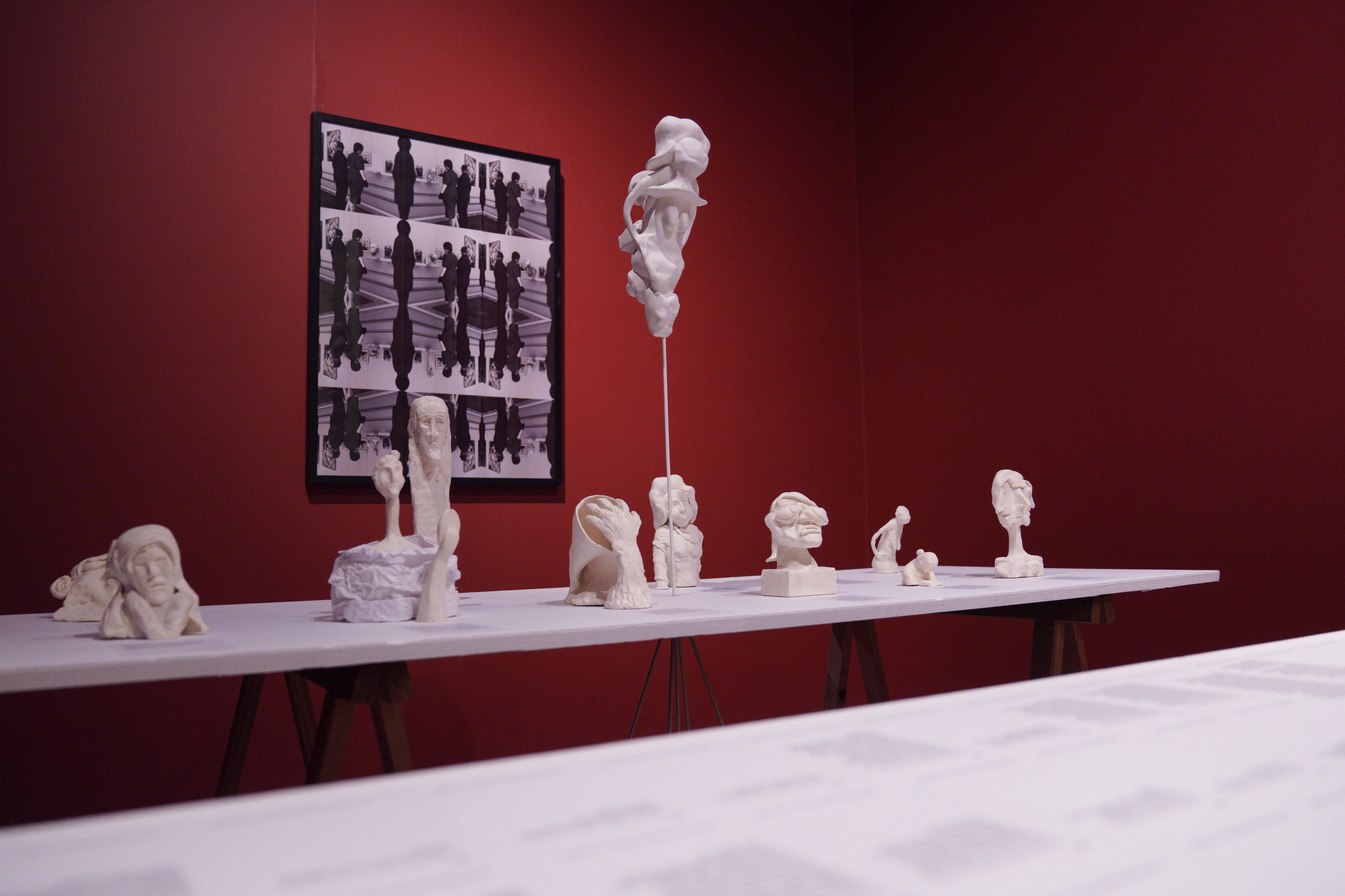
• Artefact (w757xh323xd225mm) created in the 3D software Rhino and 3D printed using plaster powder. Surface coated with acrylic paint and gloss varnish.
• Table top (w870h20d300mm) in MDF coated with acrylic paint
• Tabble cloth in linen fabric
• Frame (w600xh1200xd455mm) in stainless steel coated with steel paint
• Framed 3D rendered photographs (w805xh915xd20mm) created in Cinema 4D and Daz Studio, printed on paper.
#66 Lunch with Picasso
(...) In 1927, (Francisco) exhibited in Boston with Picasso, Louvencen and Maillol. On his trip to America, he took with him one of his most important works, O Aviador, a bronze statue with black hues of powder and bronze, which found an excellent reception among the American public. During the exhibition, Francisco Franco de Sousa Júnior used to go to Hotel Algonquin, which was next to Phillips Gallery, to eat with Dórdio Gomes and other artists who were in the exhibition, such as painter Picasso. They talked about art, politics, and war. Besides talking, it was also during these lunches that Francisco Franco de Sousa Júnior and Picasso agreed to work on an exhibition in Paris.
The food was served on plates that Americans call china.
The food was served on war trays of iron.
The food was served on small plates.
The food was served on plates of Sèvres porcelain.
The food was served on English porcelain plates.
The food was served in bowls of pottery.
The food was served on silver trays because the dinner was very formal.
∞


• Artefact (w165xh275xd155mm) created in the 3D software Rhino and 3D printed using plaster powder. Surface coated with acrylic paints and matt varnish. It contains a media player inside, playing an audio piece in loop
• Frame (w400xh1700xd400mm) in stainless steel coated with steel paint
• Framed 3D rendered photographs (w840xh915xd20mm) created in Cinema 4D and Daz Studio, printed on paper.
#63 Monsieur R.
(...) In 1927, (Francisco) exhibited in Boston with Picasso, Louvencen and Maillol, but didn’t sell any works. With the help of his friends, he gathered the necessary money to return to his country, where he was regaining appreciation from the public.
During the exhibition opening, the person responsible for the French House of Culture for the State of Massachusetts, Monsieur R., observed him with curiosity, and told him:
(Monsieur R.) “Is it true that you don’t sell anything?”
(Francisco) “No, because we are not salesmen, we are artists”
(Monsieur R.) “Then, you have to stop being artists and become salesmen”
(Francisco) “No, no, no. We are artists. But I appreciate your intention.”
(Monsieur R.) “Well, you must understand that artists, if they don’t sell, they are forever out of market.”
(Francisco) “No, no, no. We are artists. But I appreciate your intention.”
(Monsieur R.) “Well, you must understand that artists, if they don’t sell, they are forever out of market.”
(Francisco) “No, no, no. We are artists. But I appreciate your intention.”
(Monsieur R.) “Well, you must understand that artists, if they don’t sell, they are forever out of market.”
(Francisco) “No, no, no. We are artists. But I appreciate your intention.”
∞
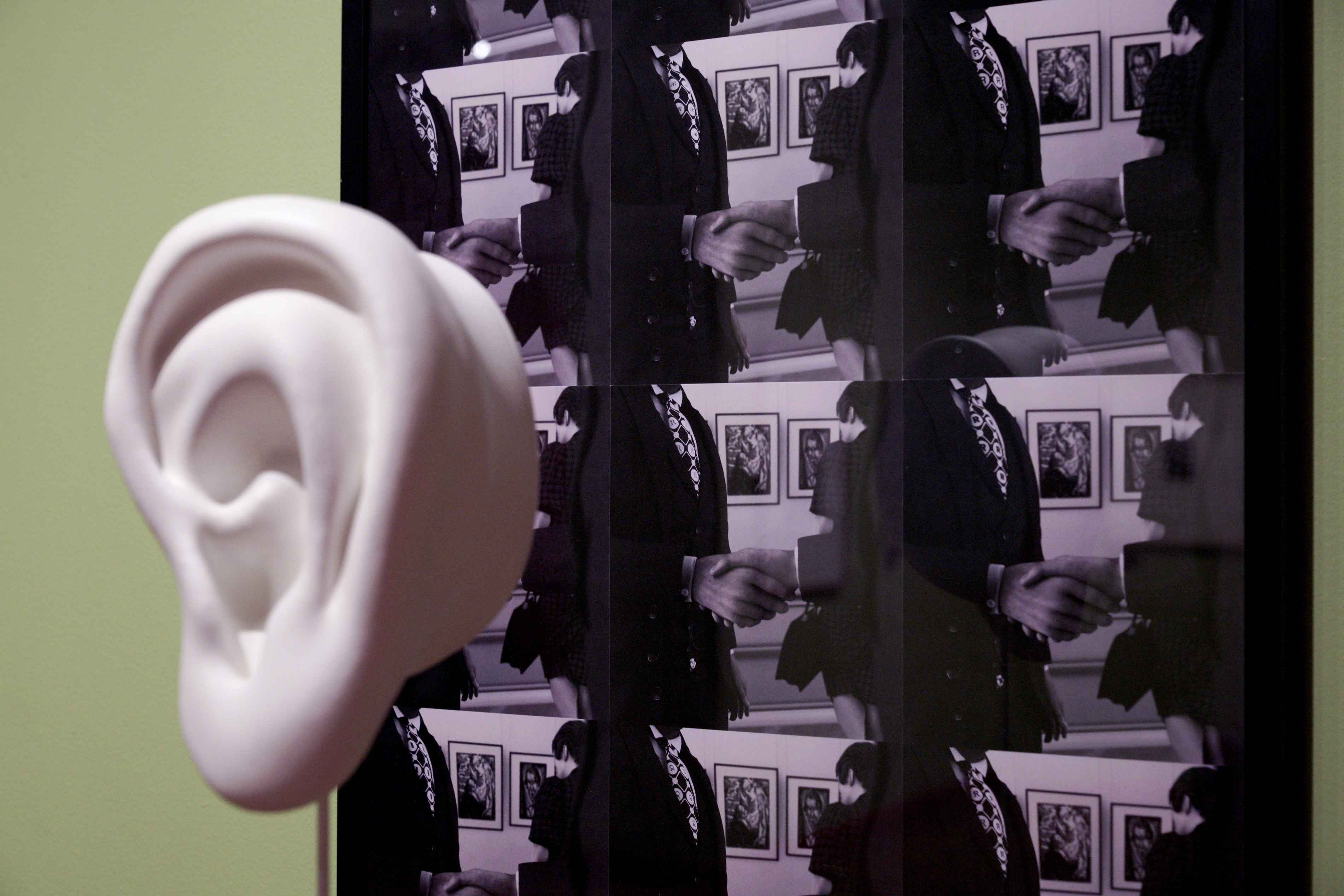


• Artefact (w155xh380xd200mm) created in the 3D software Rhino and 3D printed using plaster powder. Surface coated with acrylic paints and matt varnish.
• Frame (w400xh1700xd400mm) in stainless steel coated with steel paint
• Framed 3D rendered photographs (w855xh915xd20mm) created in Cinema 4D and Daz Studio, printed on paper.
#62 Old Lady’s Head
(...) In 1927, (Francisco) exhibited in Boston with Picasso, Louvencen and Maillol at the International Exhibition of Modern Sculpture, sponsored by the Boston League for the University Pensioner, which was his last exhibition before World War I.
He exhibited the sculptures Cabeça da Velha (Old Lady’s Head), Semeador, Adão e Eva, Virgem, Menino e Anjo, Busto de Polaca, Cabeça de Velho and Aviador. He sells one sculpture, O Semeador, to Valerie Smith.
Valerie Smith was later the wife of Massachusetts Governor Leverett Saltonstall and is considered the first wife of a Governor who is also an art collector.
Her entire collection is currently on display at the Harvard University Art Museum. The exhibition catalogue, curated by Henry Seldes, lists thirty sculptors, including painter Pablo Picasso and sculptors such as Aristide Maillol and Alexandre Louvencen. The names of the other sculptors are unknown, although Francisco Franco de Sousa Júnior was highly praised by them, not for his nature, but for his bearing, which captured the essence of the sculptor, even from a distance, imposing himself because he was not a figure of a fascinating character but of a simple personality.



▲
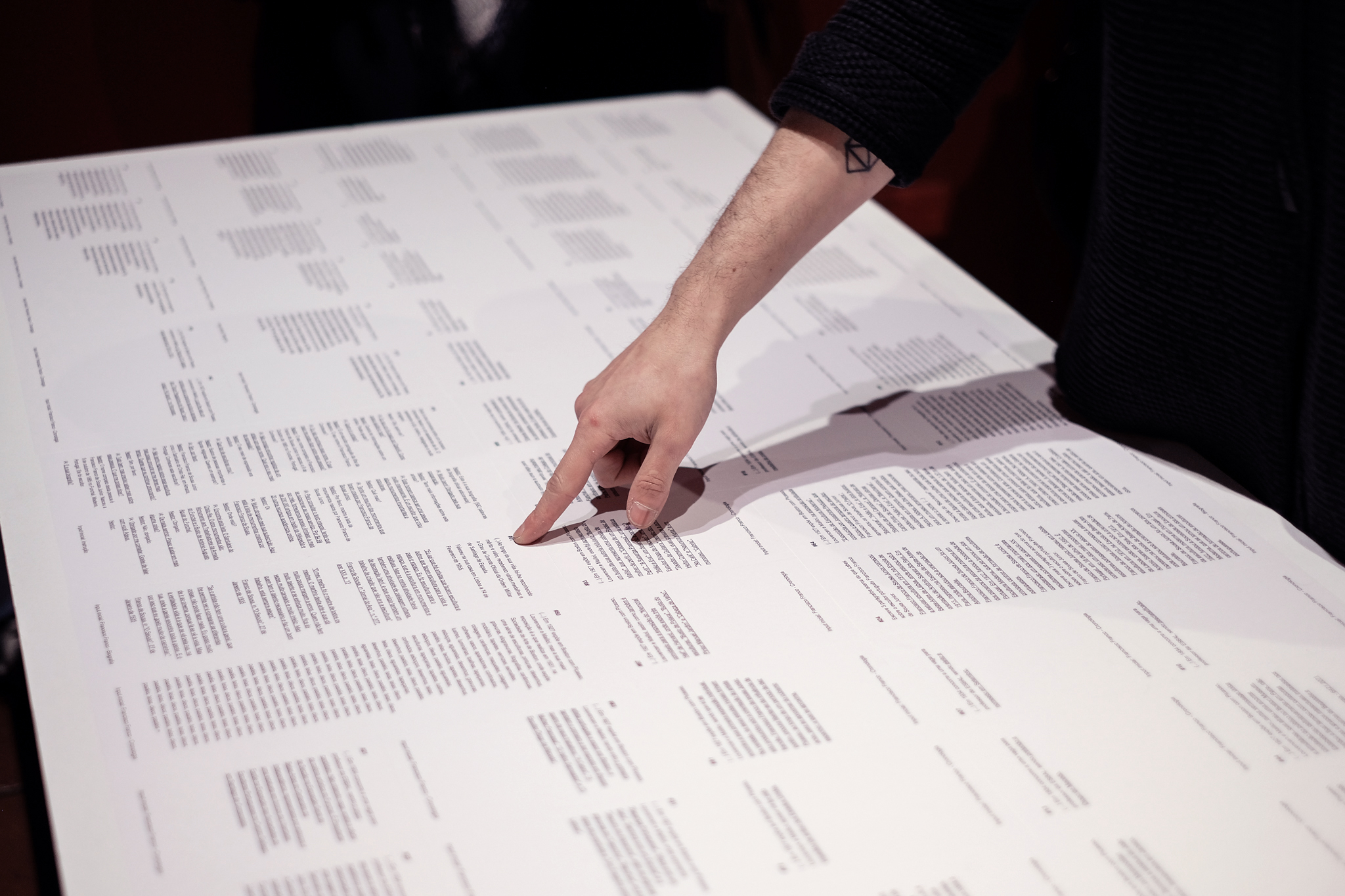
Research table
A research space was created as part of the exhibition, to give visitors the opportunity to learn more about the conceptual layers of the project. These included all the stories generated with GPT-3, the information about the platform used to generate them, old graphic materials related to the stories and the texts used to feed GPT-3, such as Francisco’s biography and chronology. They were all displayed on a table.



Project commissioned by Dr. Esmeralda Lourenço for Henrique and Francisco Franco Museum
Project supported by Funchal City Hall
Technical assistance: Zhuoyuan Mai
Research support: Prof. Gonçalo Gouveia
3D modelling assistance: Inoue Tomohiro
Sound design: Kat Thiel
Voice: Ivan Gouveia
Acknowledgments:
Martinho Mendes • Madeira ITI • Prof. Teresa Jardim • Prof. Graça Berimbau • Arquivista AI workshop participants • Catarina Pestana • Leonel Pestana
Photographs
Leonor Silva
Joana Sousa
Project supported by Funchal City Hall
Technical assistance: Zhuoyuan Mai
Research support: Prof. Gonçalo Gouveia
3D modelling assistance: Inoue Tomohiro
Sound design: Kat Thiel
Voice: Ivan Gouveia
Acknowledgments:
Martinho Mendes • Madeira ITI • Prof. Teresa Jardim • Prof. Graça Berimbau • Arquivista AI workshop participants • Catarina Pestana • Leonel Pestana
Photographs
Leonor Silva
Joana Sousa